




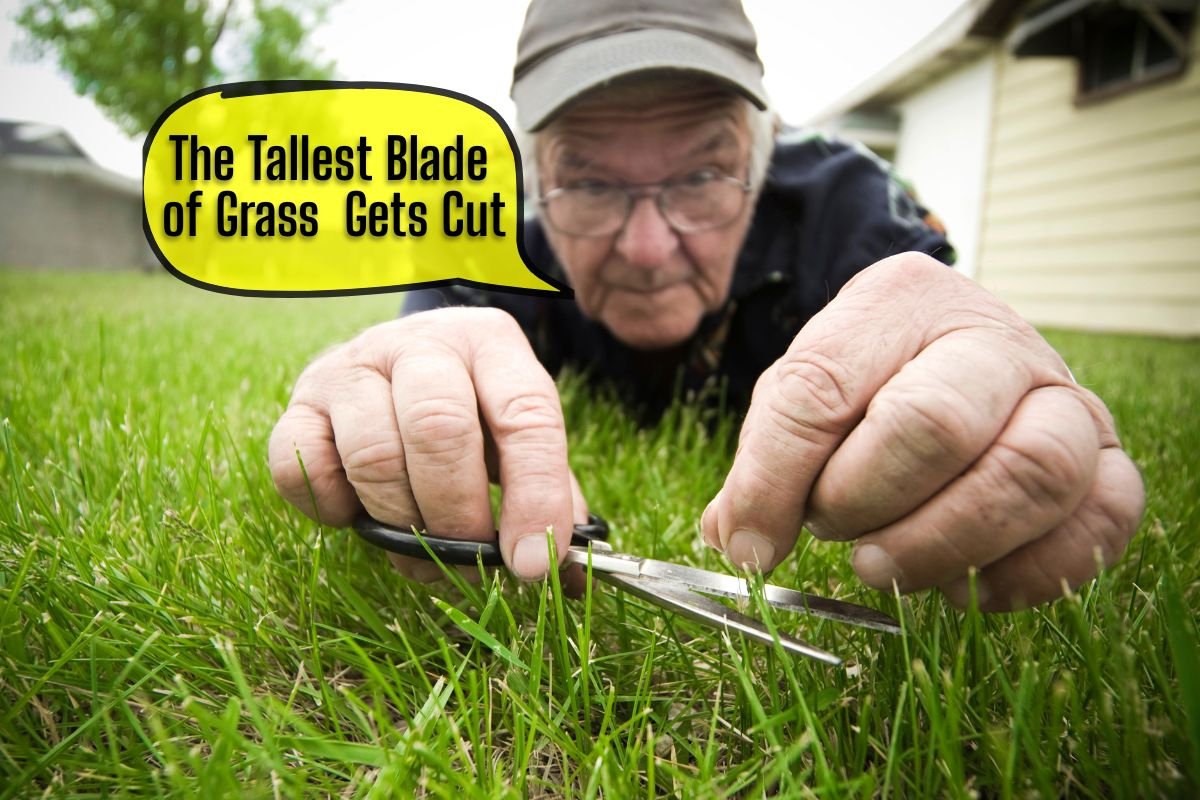
The Tallest Blade of Grass Gets Cut
From The Language Sentinel Dispatch at Learn-Hive.com
CEFR Level: B2+ / C1
You’ve probably heard the phrase “The squeaky wheel gets the grease.” But in many cultures—especially in parts of Asia and the Middle East—a different saying rings louder:
“The tallest blade of grass gets cut.”
It’s a proverb rooted in the idea of conformity, humility, and caution—a reminder that standing out can bring scrutiny or risk. And for many English learners in professional environments, this mindset quietly shapes how they speak, write, and present themselves in English.
But here’s the problem:
In English-speaking business cultures, clarity and visibility aren’t seen as arrogance—they’re seen as leadership.
What Does This Have to Do with English Fluency?
I’ve worked with hundreds of high-performing professionals—CEOs, lawyers, compliance officers, surgeons—and many of them have the same struggle. Not with grammar. Not with vocabulary.
With visibility.
They hesitate to speak up.
They downplay their ideas.
They avoid being “the tall blade” in meetings, emails, or negotiations.
Why? Because in their home culture, speaking boldly might come across as rude, disrespectful, or self-important.
But when you operate in English-speaking global teams, those very habits can make you look passive, uncertain—or even invisible.
Cultural Nuance in Action: A Japanese Example
Let’s take Japan as a concrete example. In Japanese professional culture, honne (one’s true feelings) and tatemae (public behavior) are often carefully balanced. Professionals may avoid disagreeing directly, or they may cushion feedback with vagueness to preserve group harmony. A phrase like “This might be a bit difficult” could actually mean “This is impossible.”
But when that same phrase is used in an English-language meeting with Western colleagues, it can come across as non-committal or unclear—leading to misunderstandings or missed opportunities.
Understanding these nuances isn’t just about culture—it’s about communication outcomes.
Language Is More Than Words—It’s Cultural Positioning
English fluency isn’t just about getting the grammar right.
It’s about how you show up in a room, in a call, in a sentence.
Do you say:
•“I think this might work…”
Or
•“I recommend this option because it offers the best return.”
The first sounds humble.
The second sounds like leadership.
If your default communication style avoids risk or attention, it may be time to rethink how you present yourself through English.
From Conformity to Confidence
At Learn-Hive, I don’t just teach you how to say things in English—I teach you how to own them.
Our bespoke training is designed to help you:
•Speak with authority—without sounding aggressive
•Write with clarity—without losing diplomacy
•Present ideas with impact—even in high-stakes situations
In our Hive Speaking Studio sessions, we simulate real-world business scenarios where you practice being the voice that’s remembered. It’s not about becoming arrogant. It’s about being heard.
We help you navigate the line between confidence and cultural respect—so you sound natural in any room, from Singapore to San Francisco.
What Comes Next: Speak with Impact
This post focused on mindset. But what about the how?
In next week’s post, we’ll share:
•Key phrases that sound confident but not aggressive
•How to reframe soft language without sounding robotic
•Tools for practicing assertiveness in emails and meetings
It’s time to build a toolkit that matches your ambition.
Final Thought
Language creates perception.
And in international business, how you say it matters just as much as what you say.
So, the next time you catch yourself softening your message, holding back your input, or avoiding the spotlight—ask yourself:
Am I playing small out of habit?
Or am I ready to speak like a global professional?
You can be polite without being invisible. You can be humble without being hesitant. You can be clear without being cold. Fluency isn’t the end goal. Influence is. That influence starts when you stop hiding behind “safe” language.
At The Language Sentinel Dispatch, we don’t just teach English.
We teach how to be the right kind of tall.
- Learn Hive
[…] our recent post, The Tallest Blade of Grass Gets Cut, we explored the cultural codes that often cause professionals—especially those from collectivist […]
Speak Up Don’t Stand Out - Learn Hive
[…] our recent post, The Tallest Blade of Grass Gets Cut, we explored the cultural codes that often cause professionals—especially those from collectivist […]